Strategic design foresight is the practice of spotting early signals—cultural shifts, tech breakthroughs, and changing consumer habits—and turning them into creative decisions that last. In this article we look ahead to graphic design trends 2026, not as flash-in-the-pan fads but as meaningful shifts that will reshape how brands communicate. By blending rapid tools like AI and AR with human craft, ethics, and local cultural insight, designers can create work that’s faster to produce yet richer in purpose. This introduction sets the stage for practical, strategy-driven examples that help you future-proof identities, campaigns, and systems for the years ahead.
Current state of graphic design (brief look back to 2023 → 2025)
Emerging graphic design trends 2026 — the big seven
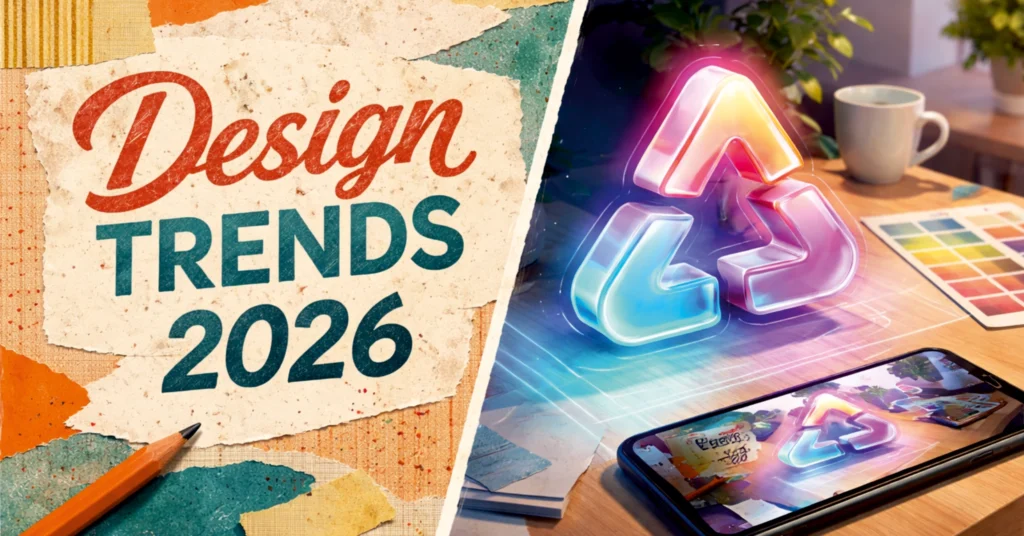
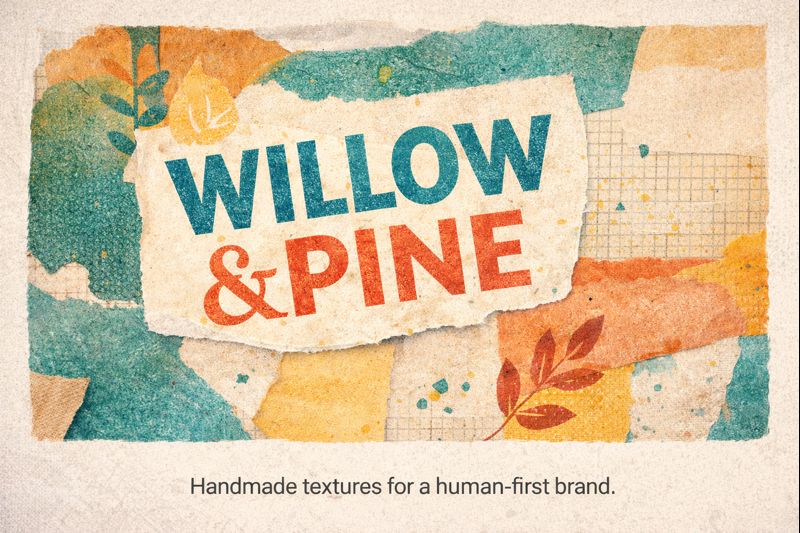
1. Imperfect by Design — the tactile rebellion
2. AI + Human Collaboration — design systems that amplify thinking
Description: Rather than AI replacing creatives, the dominant model is collaborative: AI for scale and variation; humans for strategy, judgement, and cultural insight. Expect AI-assisted moodboards, automated layout variations, instant localization, and rapid A/B creative generation.
Why it’s emerging: Tools matured rapidly in 2023–2025; by 2026 they’ll be embedded in pipelines but will require human prompts, curation, and ethical guardrails. Designers who master prompt craft and systemize AI outputs will move faster and produce more relevant work.
Impact: Job roles evolve (prompt designer, AI creative director), and design teams invest in tooling and governance. Brands must define the “human signature” — the aspects that never get automated (voice, ethics, culture).
Tactical tip: Build a lightweight “prompt handbook” for your brand that captures tone, color rules, permitted filters, and banned content to feed into generative systems.
3. Immersive & Spatial Design — AR, mixed reality, and 3D-first identities
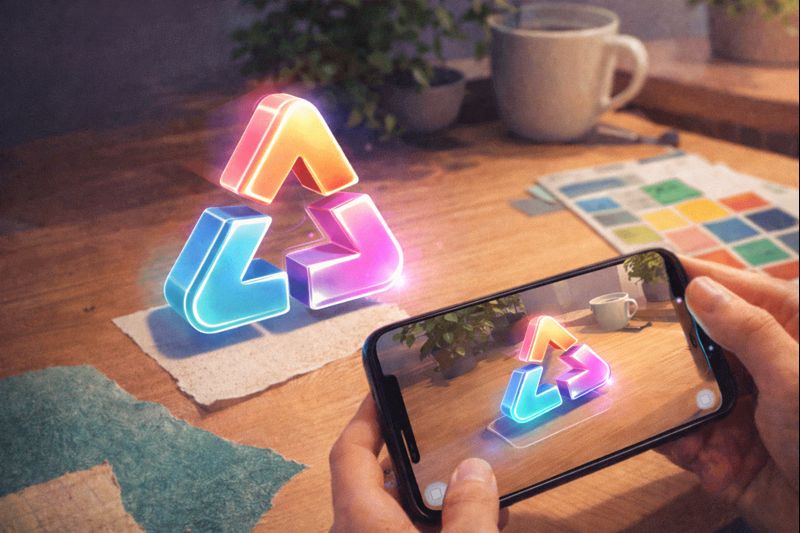
Description: Design moves beyond 2D. Visual systems are created for spatial experiences: AR filters, 3D product try-ons, virtual storefronts, and persistent brand elements in mixed reality. Identities become “living” (animated and flexible) to work on screens and in spatial layers.
Why it’s emerging: Hardware and platforms matured (AR on phones and wearables), and consumer behaviors (virtual events, social avatars) increased demand for spatial experiences. Designers are asked to extend brand systems into depth, motion, and interactivity.
Impact: Brand guidelines will include 3D model specs, interaction states, spatial audio cues, and avatar-safe logo versions. Designers will collaborate more with UX, 3D artists, and developers.
4. Motion, Multisensory & Narrative Branding
Example: A brand “stinger” (0.7–2s) that plays before all video ads, with a unique motion curve and a short sonic motif.
5. Sustainable & Localized Design
6. Adaptive & Living Identities (variable logos and responsive typography)
7. Cultural Authenticity & Inclusive Storytelling
Technological influences: how AI, AR/VR, and tooling shape practice
AI (Generative & Assistive): AI speeds ideation, automates repetitive tasks (resizing, localization, variant generation), and enables non-designers to create on-brand content with templates. But the highest value rests with human designers for concept, strategy, and ethical oversight. Teams that combine AI with structured brand systems get scale without losing identity.
AR/VR & Spatial Tools: As platforms standardize (AR SDKs, 3D model repositories), design output must include 3D assets, interaction states, and UX for persistent spatial experiences. The future designer needs a basic fluency in lighting, shaders, and interaction design.
Design Ops & Tooling: Design systems will integrate automation (token syncing, auto-export pipelines, selective AI generation), making governance crucial. Expect new roles and tools for prompt management, ethics checklists, and asset provenance tracking.
Design Ops & Tooling: Design systems will integrate automation (token syncing, auto-export pipelines, selective AI generation), making governance crucial. Expect new roles and tools for prompt management, ethics checklists, and asset provenance tracking.
Sustainability Tech: Tools to audit material footprints, simulate packaging waste, or present lifecycle visuals will become part of design workflows—helping creative teams make better choices and communicate them clearly.
Cultural and social influences shaping design
- Desire for Authenticity: Audiences favor human stories, craft, and small-batch aesthetics as a counter to mass-produced perfection. (See tactile rebellion above.)
- Attention Economy & Short Forms: Snackable visuals and fast brand recognition push concise, animated identities and sound.
- Localism & Cultural Specificity: Consumers want brands that respect and reflect local cultures—visuals must localize rather than genericize.
- Ethics & Transparency: Visual claims (eco-friendly, cruelty-free) are scrutinized; designers must show provenance visually and substantively.
- Accessibility as Design Default: Inclusive color contrast, readable typography, and motion preferences become baseline expectations, not afterthoughts.
Practical takeaways — how to apply strategic foresight now
- Audit your brand system for gaps: Do you have motion rules? 3D/AR variants? Accessibility tokens? Localized asset pipelines?
- Create a human-signature toolkit — a small, non-transferable set of assets (handmade textures, photographer credits, voice notes) that signal authorship even when using AI tools.
- Invest in cross-discipline fluency — 3D basics, audio identity basics, and prompt engineering will be high-value skills.
- Document AI governance — what AI generates are prototypes until a human edits and signs off. Keep provenance and prompt records.
- Prototype for the channel, not the medium — design hero assets for the primary user context (AR, phone video, packaging) and scale down/up using rules, not manual rework.
Example visual brief (small, practical template)
- Project: New campaign hero for wellness product
- Tone: Warm, tactile, welcoming (human handcraft + modern layout)
- Assets to create: scanned paper textures (3), motion logo stinger (0.8s), short sound motif (2s), AR try-on overlay (2 variants), localized color palettes (India / UK)
- AI usage: Generate 30 layout variants; human curation selects 5; animate chosen variant and add handmade texture scan overlays.
- Accessibility check: Color contrast 4.5:1 for body text; motion reduced option available.